
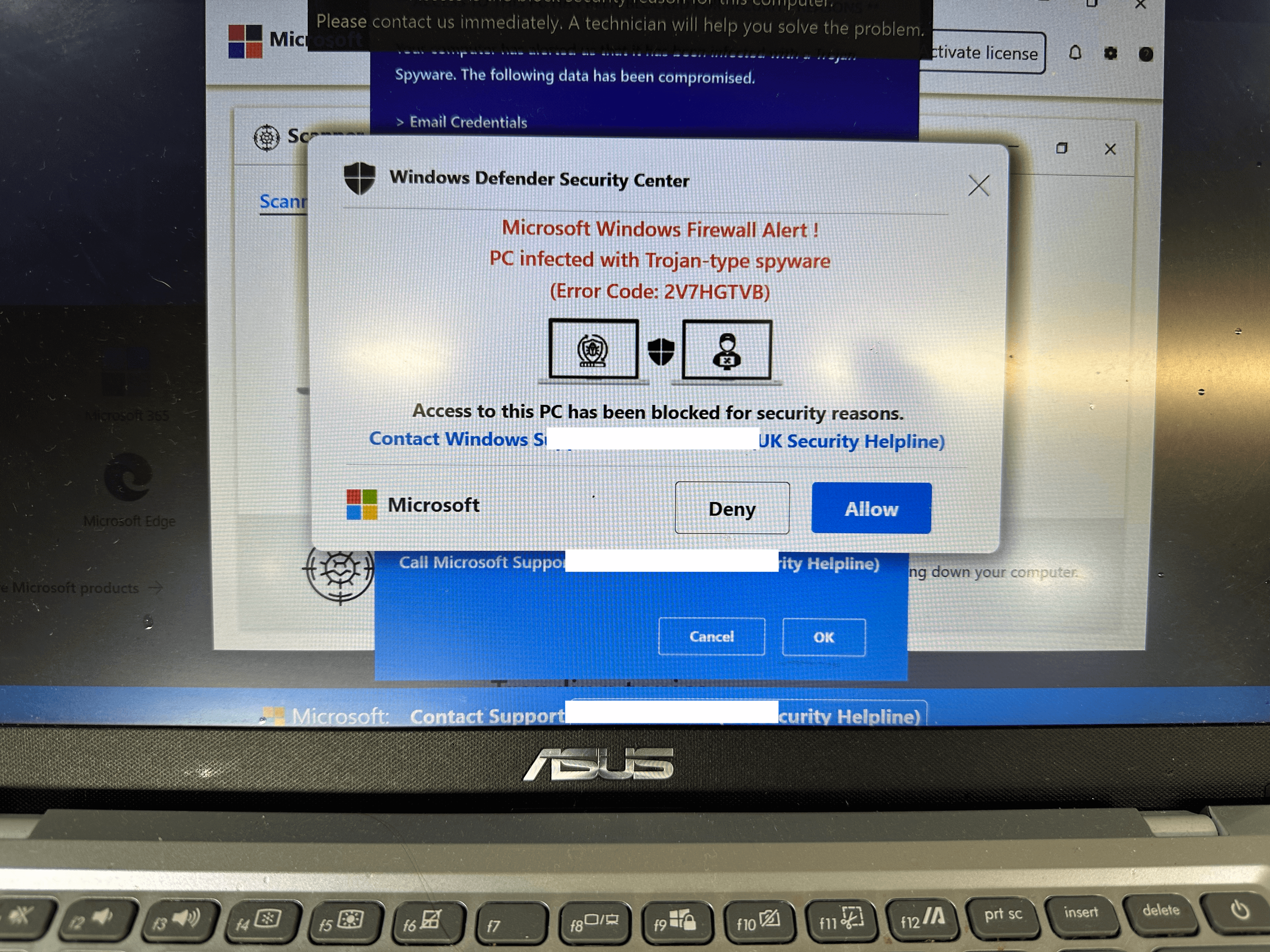
A virus or malware attack can be alarming — pop-ups, a slow machine, a locked screen, or a scary warning telling you to “call Microsoft now.” The good news is that many infections can be cleaned up safely if you act calmly and in the right order. This guide from the team at Computer Gurus in Tunbridge Wells walks you through what to do, how to remove malware yourself, and when it’s worth getting professional help.
We’ve been removing viruses and rescuing infected computers since 2004, so if anything below feels out of your depth, you can always contact us for a free diagnosis.
Signs your computer may have a virus or malware
Common warning signs include:
- Your computer suddenly runs slowly, freezes or crashes
- Pop-up adverts or fake warnings appear, even when you’re not browsing
- Your browser homepage or search engine has changed on its own
- New toolbars, extensions or programs you didn’t install
- Friends receive spam messages or emails from you
- Files are missing, renamed, or you’re locked out of them
- The fans run constantly and the machine feels hot
- Your antivirus has been switched off and won’t turn back on
One or two of these can have innocent causes, but several together usually point to malware.
First: is it a real virus, or a fake scam pop-up?
Many “virus attacks” are actually tech-support scams. You’ll see a full-screen warning — often pretending to be from Microsoft, Apple or your bank — claiming your computer is infected and urging you to call a phone number. It may play an alarm sound or say your screen is locked.
This is a scam. Real error messages from Microsoft or Apple never include a phone number to call. If you see one of these:
- Don’t panic — the alarm and countdown are there to rush you into a mistake.
- Do not call the number shown.
- Do not grant remote access to anyone who contacts you out of the blue.
- Close the pop-up (see the safe steps below). If the screen is stuck, press and hold the power button to shut down, then restart.
If you did call or let someone connect to your machine, jump to “What to do if you already gave the scammers access” further down — treat it as urgent.
What to do right now
- Disconnect from the internet. Turn off Wi-Fi or unplug the network cable. This stops malware sending your data out, spreading, or letting a scammer back in.
- Don’t enter passwords or card details on the affected computer until it’s clean.
- Note what happened — when it started, any message wording, and anything you clicked or installed. It helps diagnosis.
- Back up important files if you can do so safely (photos, documents) to an external drive — but don’t copy program files or anything you’re unsure about.
How to remove a computer virus yourself (Windows)
If the machine still starts up, you can often clean it with these steps:
1. Start in Safe Mode
Safe Mode loads Windows with only the essentials, which stops most malware running. In Windows 10 or 11: go to Settings → System → Recovery → Advanced startup → Restart now, then choose Troubleshoot → Advanced options → Startup Settings → Restart, and press 5 for Safe Mode with Networking.
2. Run a full scan with Microsoft Defender
Windows has built-in protection. Open Windows Security → Virus & threat protection → Scan options → Full scan. Let it run fully and remove anything it finds.
3. Run a second-opinion scan
No single tool catches everything. Download the free version of Malwarebytes (from the official malwarebytes.com only) and run a scan to catch adware and browser hijackers Defender may miss.
4. Remove suspicious programs and browser add-ons
In Settings → Apps, uninstall anything you don’t recognise or didn’t install. In your browser, remove unknown extensions and reset the homepage and search engine.
5. Update everything
Install the latest Windows updates and update your browser. Many infections exploit out-of-date software.
6. Change your important passwords
From a different, clean device, change passwords for email, banking and shopping accounts, and turn on two-factor authentication where you can.
Restart normally and check the problems have gone. If they come back, the infection is deeper — that’s a good point to get professional help.
Types of malware you might be dealing with
- Viruses & trojans — malicious programs that spread or hide inside normal-looking files.
- Spyware — secretly records what you type or steals logins.
- Adware & browser hijackers — flood you with pop-ups and change your browser.
- PUPs (potentially unwanted programs) — bundled junk that slows things down.
- Ransomware — the most serious (see below).
Ransomware: an important special case
Ransomware locks or encrypts your files and demands payment. If you see a ransom message:
- Disconnect from the internet and any external drives immediately to stop it spreading.
- Do not pay. There’s no guarantee you’ll get your files back, and it funds more crime.
- Don’t wipe the machine yet — restore may be possible.
- Restore your files from a clean backup if you have one.
- Get expert help quickly — this is one to leave to professionals.
In the UK you can also report it to Action Fraud (actionfraud.police.uk or 0300 123 2040).
Do Macs get viruses too?
Yes — while Macs are less targeted, they absolutely get adware, fake pop-ups and scam warnings. The same rules apply: don’t call numbers in pop-ups, don’t grant remote access, disconnect from the internet, and run a reputable malware scanner. We repair and clean up Macs as well as Windows PCs.
How to prevent future infections
- Keep Windows/macOS and your browser updated.
- Use reputable antivirus and leave it switched on.
- Don’t click links or open attachments from unexpected emails or texts.
- Only download software from official sources.
- Use strong, unique passwords and turn on two-factor authentication.
- Be suspicious of pop-ups and phone calls claiming your PC is infected.
- Back up your data regularly — follow the 3-2-1 rule: three copies, on two types of media, with one kept off-site or in the cloud. A good backup turns almost any infection into a minor inconvenience.
When to get professional help
It’s worth calling us if:
- The infection keeps coming back after you’ve cleaned it
- You’re locked out by ransomware or your files are encrypted
- Banking, email or identity details may have been exposed
- The computer won’t start, or won’t reach Safe Mode
- It’s a business computer — infections can spread across a network fast (we offer business IT support for exactly this)
We regularly help local customers who’ve clicked a fake “Microsoft” warning, picked up ransomware from an email attachment, or found their browser hijacked by pop-ups — and in most cases we save the data and get them back up and running the same day. We can do this in-store or, for many issues, safely via remote support.
Why choose Computer Gurus
- Virus removal and computer repair specialists — established since 2004
- Free, no-obligation diagnosis and a clear quote before any work
- Quality service backed by our 6-month warranty
- Friendly, experienced technicians — plain English, no jargon
- Local to Tunbridge Wells with free customer parking, plus remote and collection options
- Trusted by hundreds of local customers with 600+ Google reviews
- Open 7 days a week, 8am–8pm
Not sure where to start? Our computer help team is happy to talk it through.
Frequently asked questions
How do I know if my computer has a virus?
Common signs are sudden slowness, freezing or crashing, unexpected pop-ups or fake warnings, a changed browser homepage, unknown programs, or your antivirus being switched off. Several of these together usually mean malware.
Is the “your computer is infected — call this number” pop-up real?
No. That’s a tech-support scam. Genuine Microsoft or Apple messages never tell you to call a number. Don’t call it and don’t grant anyone remote access.
Can I remove a computer virus myself?
Often, yes. Disconnect from the internet, start in Safe Mode, run a full Microsoft Defender scan followed by a free Malwarebytes scan, remove suspicious programs, update everything and change your passwords from a clean device. If it keeps returning, get professional help.
Is Windows Defender enough to remove a virus?
Defender is a solid first line and handles many infections. For stubborn adware or hidden malware it’s best paired with a second-opinion scan, and ransomware or repeat infections should be handled by a professional.
I already called the scammers or let them access my computer — what should I do?
Treat it as urgent. Disconnect from the internet, shut the computer down, and from a different device change your email, banking and shopping passwords and enable two-factor authentication. Contact your bank, have the device professionally checked, and report it to Action Fraud.
What is ransomware and should I pay?
Ransomware locks or encrypts your files and demands payment. Don’t pay — there’s no guarantee of recovery and it funds crime. Disconnect the machine, restore from a clean backup if you have one, and get expert help quickly.
Do Macs get viruses?
Yes — usually adware and scam pop-ups rather than classic viruses, but the same steps apply. We clean up infected Macs as well as Windows PCs.
Do you offer virus removal, and how much does it cost?
Yes — in-store or remotely. Every job starts with a free diagnosis, and we confirm the price before any work begins.
Get your computer cleaned up today
If your computer is under attack or acting strangely, call 01892 529999, email help@computergurus.co.uk, or Book a Repair online. Visit us at 7 Yew Tree Road, Tunbridge Wells, Kent TN4 0BD — free customer parking, open every day 8am–8pm
